
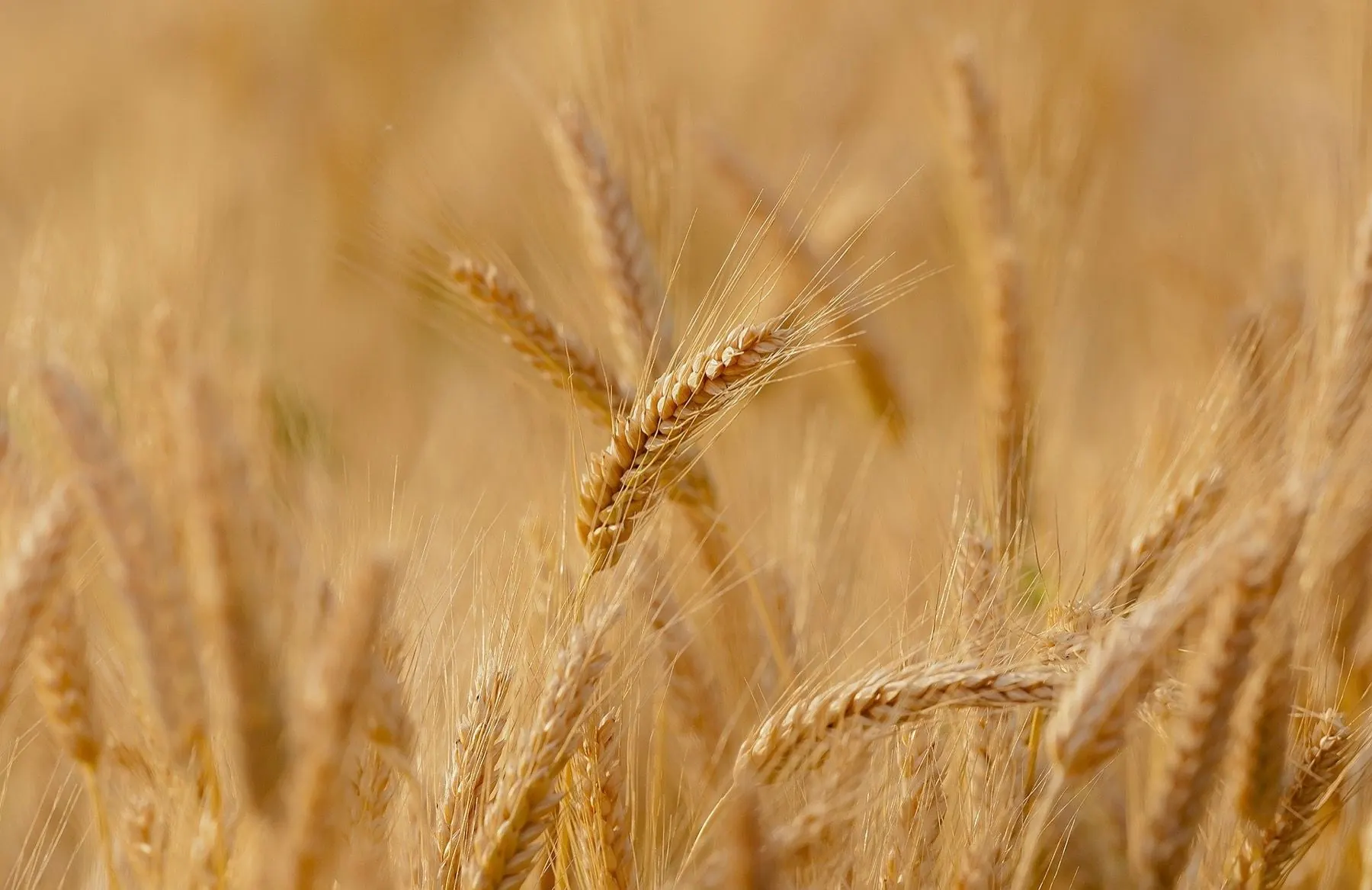
For the feed industry
Services, tools, problems: three steps, start wherever you like.
Step 1
Specialists who formulate, buy and check with you
Since 2001 we have worked with feed mills, premix producers and raw-material traders, and today with biogas plants too: about 60,000 tonnes traded a year. Tap a service.
Formulation
Feed specialists who also formulate for major feed mills.Our specialists review your formulas for pigs, cattle and other species, propose raw-material and additive alternatives and follow the results on the farm with your customers. An example of how we work, to try right now: converting between as-fed and dry matter with the values for distillers’ grains and the EPs.
Calculation tool
As-fed and dry matter converter
Doses and analyses are expressed on an as-fed or a dry matter basis. Choose the raw material, or enter the dry matter percentage, and convert in either direction.
Conversion result
- Dry matter
- kg
- Water
- kg
- As fed per 1 kg of dry matter
- kg
1,000 kg of distillers’ grains as fed contain about 400 kg of dry matter and 600 kg of water.
Dry matter of Alpha raw materials
Dry matter of the raw materials Raw material Dry matter Source Liquid wheat Distillers’ grains (WWDG) about 40% distillers’ grains page, alphasrl.com EP100 880 g/kg (88%) manufacturer’s technical data sheet, EP100, version 18-02-2021 EP199 890 g/kg (89%) manufacturer’s technical data sheet, EP199, version 01-03-2020 EP200 895 g/kg (89.5%) manufacturer’s technical data sheet, EP200, version 18-02-2021 For fermented products the values are averages from analyses: some variation in chemical composition is possible. Formula: dry matter = as fed × % DM / 100; as fed = dry matter × 100 / % DM.
Purchasing office
Advice on buying technological and strategic raw materials.- Which raw materials do you follow?
- The technological and strategic ones for the formula: cereals and food-industry by-products, liquid raw materials, protein sources, additives, premixes and nutraceuticals.
- What does “direct access to international innovation” mean?
- We bring you technological novelties as they arrive, with comparable specifications and alternatives, with no intermediaries.
- How do we know whether a purchase pays off?
- With economic and management reviews of production efficiency, done together on your own figures.
Trials and controls
On-farm trials with a protocol, analyses of raw materials and feeds.Every trial has a protocol and a control group; raw materials and feeds are analysed before and during; the products supplied are checked. One measured result, from the Mamy Nova 1% technical data sheet:
+4–8%
Weaning weight
Litters of sows fed Mamy Nova at 1% of the lactation feed, in field trials and at experimental stations.
Source: Mamy Nova 1% technical data sheet
Quality and certifications
Products made in plants certified to ISO 9001, FAMI-QS and GMP+.Alpha products are made in plants certified to ISO 9001, FAMI-QS and GMP+: the plants’ certificates are available on request.
- ISO 9001
- The quality management system.
- FAMI-QS
- The European standard for premixes and additives.
- GMP+
- Feed safety along the supply chain.
The organic line includes products certified for organic farming; certificates are available on request.
Biogas and biomethane
Biomass for bioenergy plants, with the numbers in hand.- Biomass
- PrimeBoost, screened food-industry by-products for co-digestion, liquid wheat distillers’ grains.
- Comparison
- The cost per cubic metre of methane, compared with maize meal and wheat bran.
- Prices
- Dated reference prices, which you can replace with your own.
- Supply
- Continuous, with a single contact for the plant.
A sales network on the ground
Partners, agents and specialists follow every customer directly.- PartnersNegotiations and continuous supplies
- AgentsOn the ground, at your site
- SpecialistsFormulation and farm visits
Products for those who produce
A selection for feed mills, premix producers, raw-material traders and biogas plants. Everything else is in the catalogue.
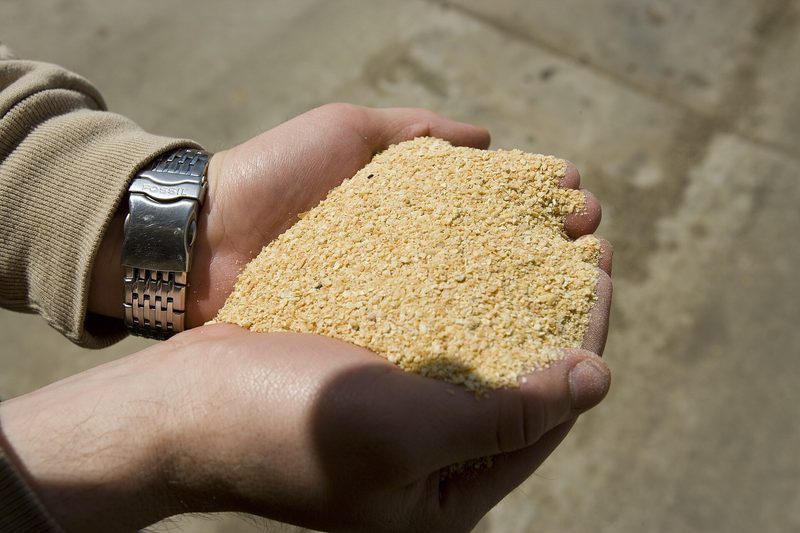
EP199 and EP200
Weaned piglets
Rapeseed, seaweed and soya fermented with lactic bacteria: proteins with lactic acid and fewer anti-nutritional factors than the starting raw materials, for weaning diets.

EP100
Pigs, ruminants and poultry
Fermented rapeseed: the basis of the fermented-feed family, with lactic acid and fewer anti-nutritional factors than the starting rapeseed.
- Supplement
Hextra 19
Piglets, difficult conditions
Added to the fermented feeds when environmental conditions are particularly critical.

Liquid wheat distillers’ grains
Finishing pigs and sows
Protein, starch and fat at a good price, in place of part of the soya and cereals; it also helps use fewer acidifiers. Only for pigs outside the Parma ham PDO circuit.
- Liquid raw material
Wheat Soluble Concentrate 222
Pigs and cattle
From the same wheat processing: digestible plant proteins, natural lactic acid and carbohydrates. For pigs: only outside the Parma ham PDO circuit.
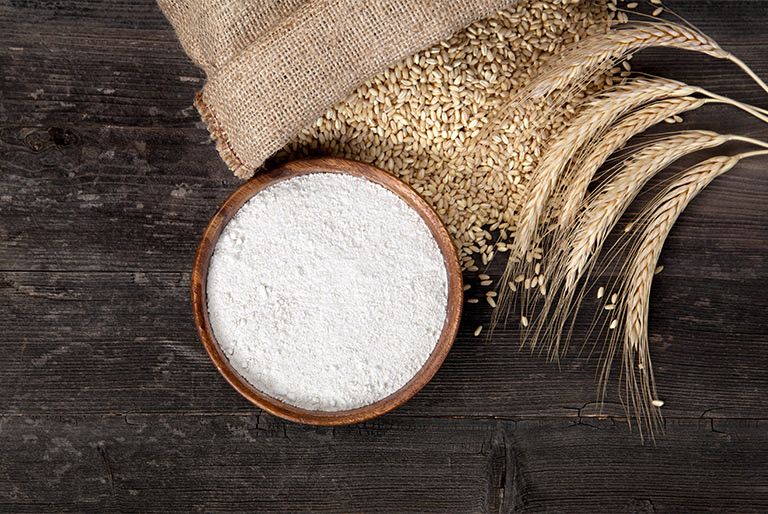
Biscuit meal
Sows and piglets
Ground bakery, pasta and confectionery products: energy and palatability in the ration, also in summer when appetite drops. Only for pigs outside the Parma ham PDO circuit.
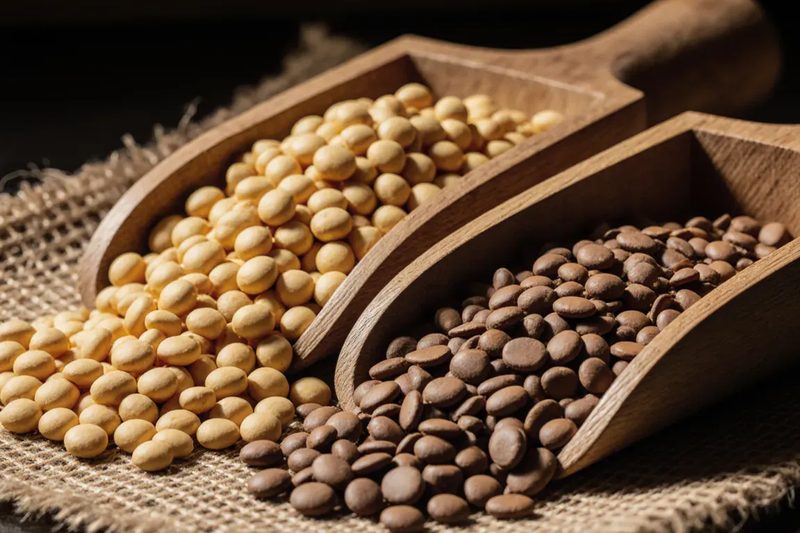
MAIZE, SOYA and LINSEED BEXT
Dairy cows
Extruded maize, whole soya and linseed: more digestible, more protein reaching the intestine and omega-3 from linseed.
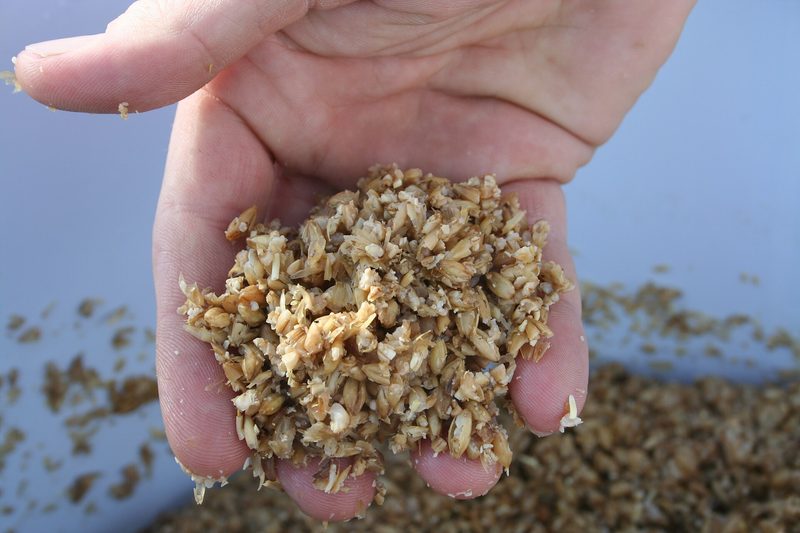
Brewers’ grains
Cows and beef cattle
The co-product of breweries: protein, fat and fibre concentrated in a natural, very palatable feed.
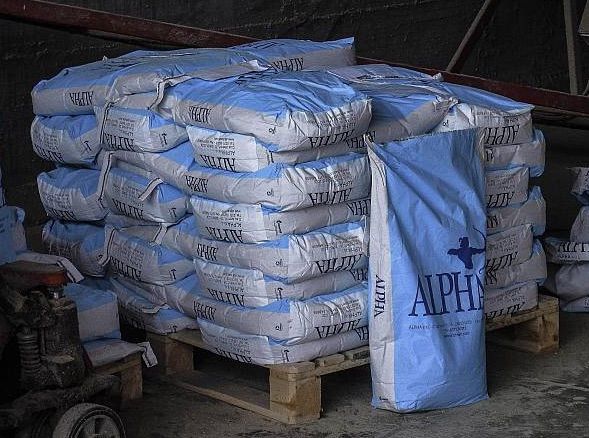
Tailored premixes and supplements
Every phase
Vitamins, minerals and concentrates designed on your ration and your goals.
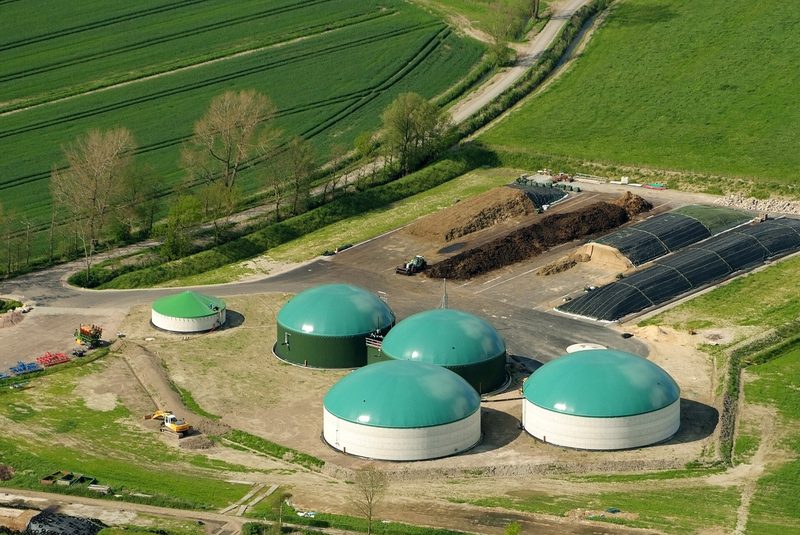
PRIMEBOOST
Biogas and biomethane plants
Food-industry by-products, screened and ready for co-digestion in authorised plants: a lot of energy per tonne compared with maize meal and bran.


Step 2
Data and calculations for formulators
Comparisons, contributions, dosing and conversions with the values from the technical data sheets (the manufacturer’s, for EP100, EP199 and EP200). Indicative values: the formula should be checked with Alpha’s technical service.
- 1 of 6
Compare EP100, EP199, EP200
Nutrients, SID amino acids, energy and minerals.
Technical tool · Feed industry
EP100, EP199 and EP200 compared
Choose a parameter: the chart compares the three EP fermented feeds and the table highlights the highest value in each row. Tap a parameter name in the table to show it in the chart.
Parameter compared
- Highest value: EP200
- g/kg
Crude proteing/kg of product as fed Crude protein: EP200 495 g/kg, EP100 340 g/kg, EP199 338 g/kg. The highest value is EP200.
Composition compared values per kg of product as fed; the highest value in each row is in bold; tap a parameter name to show it in the chart
Nutrients and energy
Nutrients and energy of EP100, EP199 and EP200 Parameter EP100 EP199 EP200 Dry matter g/kg 880 890 895 (highest) Crude protein g/kg 340 338 495 (highest) Crude fat g/kg 37 (highest) 37 (highest) 23 Crude fibre g/kg 101 110 (highest) 34 Crude ash g/kg 82 87 (highest) 65 Starch g/kg 9 24 30 (highest) Sugars g/kg 55 (highest) 42 30 ME pigs MJ/kg 10.1 10.6 14.7 (highest) ME broilers MJ/kg 6.9 6.8 10.0 (highest) ME layers MJ/kg 7.8 7.7 10.4 (highest) Minerals, lactic acid and lactic acid bacteria
Minerals, lactic acid and lactic acid bacteria of EP100, EP199 and EP200 Parameter EP100 EP199 EP200 Calcium g/kg 6.7 7.1 (highest) 3.8 Phosphorus g/kg 9.7 (highest) 9.6 6.7 Digestible phosphorus g/kg 6.3 (highest) 6.3 (highest) 4.6 Sodium g/kg 0.6 1.3 (highest) 0.02 Potassium g/kg 13.8 12.2 22.6 (highest) Chlorine g/kg 0.6 0.7 (highest) 0.4 Lactic acid g/kg 60 50 74 (highest) Lactic acid bacteria Enterococcus faecium NCIMB 10415 > 10⁶ CFU/g > 10⁶ CFU/g > 10⁹ CFU/kg (= 10⁶ CFU/g) Amino acids total and SID digestible for pigs and poultry, g/kg
Amino acids of EP100, EP199 and EP200, total and digestible (SID) Amino acid EP100Total EP199Total EP200Total EP100SID pigs EP199SID pigs EP200SID pigs EP100SID poultry EP199SID poultry EP200SID poultry Lysine 19.0 18.2 29.0 (highest) 15.6 14.9 26.1 (highest) 16.4 15.7 26.4 (highest) Methionine 6.6 6.5 6.9 (highest) 5.7 5.6 6.2 (highest) 6.2 6.1 6.3 (highest) Methionine + cystine 14.7 (highest) 14.3 13.5 12.1 (highest) 11.7 11.9 13.0 (highest) 12.7 12.6 Threonine 14.9 14.6 20.4 (highest) 11.9 11.7 18.2 (highest) 12.3 12.0 19.2 (highest) Tryptophan 4.8 4.6 6.7 (highest) 3.8 3.8 6.1 (highest) 4.3 4.2 6.4 (highest) Isoleucine 12.7 12.3 22.9 (highest) 10.5 10.2 20.8 (highest) 11.0 10.6 21.5 (highest) Arginine 19.6 19.2 34.1 (highest) 17.4 17.1 32.4 (highest) 17.7 17.3 33.0 (highest) Histidine 8.8 8.7 13.4 (highest) 7.6 7.5 12.0 (highest) 7.8 7.7 12.7 (highest) Leucine 23.5 22.9 39.2 (highest) 19.7 19.2 35.7 (highest) 20.5 20.0 37.2 (highest) Valine n/a (not reported) 16.1 23.9 (highest) n/a (not reported) 12.9 21.5 (highest) n/a (not reported) 13.8 21.9 (highest) Phenylalanine n/a (not reported) 13.1 26.6 (highest) n/a (not reported) 11.0 24.4 (highest) n/a (not reported) 11.4 25.2 (highest) Tyrosine 9.8 9.8 18.0 (highest) 8.1 8.1 16.4 (highest) 8.6 8.6 16.9 (highest) n/a: EP100 valine and phenylalanine are not reported and are not compared.
EP200: anti-nutritional factors
Anti-nutritional factors of EP200 Factor EP200 TIA (trypsin inhibitors) < 0.5 mg/g β-conglycinin < 0.5 mg/g Lectins < 0.05 mg/g Raffinose and stachyose < 0.5% The manufacturer’s technical data sheets do not give dosages. “Figures based on analyses, representing an average”: as these are fermented feeds made from natural raw materials, composition may vary. EP200 is intended for pigs and poultry. Target species: those stated in the manufacturer’s technical data sheets. The technical data here are those of the data sheets. Find out more on Nutraceuticals.
- 2 of 6
Nutrient contribution of the EPs
What the EPs add to one tonne of feed.
Technical tool · Feed industry
Nutrient supply from EP fermented feeds
Enter the inclusion rate of one or more EP fermented feeds: the tool calculates how much protein, lysine, energy, lactic acid, calcium and phosphorus each tonne of feed receives.
Supply per tonne of feed
- Crude protein supplied
- kg per t of feed
- EP fermented feeds in the feed
- %
- Product per tonne
- kg/t
Supply per tonne of feed Nutrient Per tonne In the feed For the batch Crude protein 0.00 kg/t 0.00 % 0.00 kg/t SID lysine, pigs 0.00 kg/t 0.000 % 0.00 kg/t ME pigs 0 MJ/t 0.00 MJ/kg 0 MJ/t Lactic acid 0.00 kg/t 0.00 % 0.00 kg/t Calcium 0 g/t 0.00 g/kg 0 g/t Phosphorus 0 g/t 0.00 g/kg 0 g/t Digestible phosphorus 0 g/t 0.00 g/kg 0 g/t Which product supplies each nutrientshare of the supply by product, % Enter the inclusion rate of at least one product.
How it is calculated
For each product: kg per tonne of feed = inclusion % × 10; supply = kg of product × content from the manufacturer’s technical data sheet (g or MJ per kg). The total supply is the sum of the products included.
Contents used in the calculation, per kg of product Nutrient EP100 EP199 EP200 Crude protein g/kg 340 338 495 SID lysine, pigs g/kg 15.6 14.9 26.1 ME pigs MJ/kg 10.1 10.6 14.7 Lactic acid g/kg 60 50 74 Calcium g/kg 6.7 7.1 3.8 Phosphorus g/kg 9.7 9.6 6.7 Digestible phosphorus g/kg 6.3 6.3 4.6 The supply covers only the EP fermented feeds: the rest of the formula is not considered.
- 3 of 6
Batch dosing
Kilograms of each product per batch and per week.
Technical tool · Feed industry
Dosage per batch
From the batch size and the tonnes produced in a week, the kilograms of each product to load at the reference inclusion rates or at the rates you set. The total is checked.
Products to load
- Products to load per batch
- kg
- Batches per week
- Total inclusion
- %
Quantities per batch and per week Product Inclusion Per batch Per week EP199 0% 0 kg 0 kg EP200 0% 0 kg 0 kg Hextra 19 0% 0 kg 0 kg Mamy Nova 1% 1% 20 kg 500 kg Rest of the formula 99% 1,980 kg 49,500 kg Total of listed products 1% 20 kg 500 kg Composition of one batchin % and kg A 2,000 kg batch needs 20 kg of Mamy Nova 1%; with 50 t a week, 0.5 t of products in total.
Reference inclusion rates
Reference inclusion rates of Alpha products Product Inclusion Per 1,000 kg Use EP199 — — inclusion rate to be set with Alpha’s technical service EP200 — — inclusion rate to be set with Alpha’s technical service Hextra 19 — — inclusion rate to be set with Alpha’s technical service Mamy Nova 1% 1% 10 kg 1% of the lactation feed EP199, EP200 and Hextra 19: the inclusion rate should be set with Alpha’s technical service. Mamy Nova 1%: to be added to standard farrowing-room diets (technical data sheet (Italian)).
- 4 of 6
Unit converter
%, g/kg, kg/t, ppm and g/head/day.
Technical tool · Feed industry
Feed unit converter
Percentages, g/kg, kg/t, g/t, mg/kg and ppm in one go; and the conversion from grams per head per day to percentage of the ration, given the daily intake.
10 g/kgEquivalents
- Percentage
- %
- Grams per kg
- g/kg
- Kilograms per tonne
- kg/t
- Grams per tonne
- g/t
- Milligrams per kg
- mg/kg
- Parts per million
- ppm
Where the value sitslogarithmic scale from 1 ppm to 100% Dose and percentage
- Percentage of the ration
- %
- Equivalent concentration
- g/kg
1% = 10 g/kg = 10 kg/t = 10,000 g/t = 10,000 mg/kg = 10,000 ppm.
Table of equivalents
Equivalents between concentration units Value g/kg kg/t g/t mg/kg = ppm 1% 10 10 10,000 10,000 0.1% 1 1 1,000 1,000 1 g/kg 1 1 1,000 1,000 1 ppm 0.001 0.001 1 1 Dose and percentage: % of the ration = dose in g/head/day ÷ (intake in kg/head/day × 1,000) × 100. Worked example (test values): 200 g/head/day with 20 kg of ration = 1% (10 g/kg).
General conversion formulae (ppm by mass, mg/kg). Dose and intake must be expressed on the same basis, as fed or dry matter.
- 5 of 6
Trial data
Trial results in charts and tables.
Technical tool · Feed industry
Trial data: Mamy Nova 1%
The result stated in the Mamy Nova 1% technical data sheet for lactating sows: litter weight at weaning, with chart, data table and source.
+4–8%Published results
Mamy Nova 1%: litter weight at weaning
+4–8%
Weaning weight
with Mamy Nova at 1% of the lactation feed
Source: Mamy Nova 1% technical data sheet, Alpha Srl
Higher feed intake, a well-developed mammary system and reduced oxidative stress lead to higher milk production: in field trials and studies at experimental stations, weaning weight increases by 4 to 8%, and so does the number of piglets weaned.
Increase in weaning weightrange stated in the technical data sheet, % Source: Mamy Nova 1% technical data sheet, Alpha Srl (Italian).
Data table
Increase in weaning weight with Mamy Nova 1% Value Increase Minimum 4% Maximum 8% To calculate how much Mamy Nova you need in the farrowing room, use the dedicated tool Mamy Nova in the farrowing room.
- 6 of 6
Reference rations
The rations published in technical articles.
Technical tool · Feed industry
Reference rations
The rations published in technical articles written by Alpha’s technical service and in related studies: composition by phase, stacked bar chart and analytical data, with a link to the original article.
18.04% DMRation composition
Danish finishing pigs on whole-ear maize silagecomposition, % of dry matter Analytical data · 40/80 kg
Danish finishing pigs on whole-ear maize silage Table 1, % of dry matter
Ration used on a farm in the Lodi area (about 4,000 Danish pigs): no wheat bran or beet pulp, the fibre comes from the whole-ear maize silage.
For pigs: biscuit meal, former foodstuffs and distillers’ grains only for pigs outside the Parma ham PDO circuit.
Composition % of dry matter
Ration composition, % of dry matter Component 40/80 kg 80/120 kg 120/165 kg Whole-ear maize silage (5.8% crude fibre) 33.0 33.0 33.0 Solvent-extracted soya bean meal 17.0 14.0 11.0 Whey 12.0 11.0 12.0 Wheat distillers’ grains 8.0 12.0 14.0 Broken biscuits (biscuit meal) 27.0 27.0 27.0 Mineral feed 3.0 3.0 3.0 Total 100.00 100.00 100.00 Analytical data
Analytical data Parameter 40/80 kg 80/120 kg 120/165 kg Crude protein % DM 18.04 17.71 17.09 Crude fat % DM 5.57 5.72 5.81 Crude fibre % DM 4.48 4.34 4.20 Crude ash % DM 6.50 6.55 6.60 Total lysine % DM 1.07 1.00 0.92 Digestible energy kcal/kg DM 3,875 3,875 3,875 Source: M. Rizzi, “Pastone integrale: un tesoro in azienda” (Whole-ear maize silage: a treasure on the farm), Suinicoltura no. 1, January 2014, pp. 44–46, Table 1. Read the article (PDF, Italian)
PDO heavy pig: maize and bran or whole-ear maize silage Table 2, % of dry matter
A whole-ear maize silage with 4.8% crude fibre used at 50% of the ration replaces the wheat bran entirely; the ration should be corrected for the slight drop in protein.
Composition % of dry matter
Ration composition, % of dry matter Component Maize + bran Whole-ear maize silage Maize meal 53.5 15.0 Barley 15.0 15.0 Solvent-extracted soya bean meal 15.0 16.0 Wheat bran 12.5 – Mineral feed 3.0 3.0 Lard 1.0 1.0 Whole-ear maize silage (4.8% crude fibre) – 50.0 Total 100.00 100.00 Analytical data
Analytical data Parameter Maize + bran Whole-ear maize silage Crude protein % DM 16.80 16.45 Crude fat % DM 4.25 4.17 Crude fibre % DM 4.75 4.70 Crude ash % DM 5.25 4.90 Total lysine % DM 0.87 0.86 Digestible energy kcal/kg DM 3,635 3,650 Source: M. Rizzi, “Pastone integrale: un tesoro in azienda” (Whole-ear maize silage: a treasure on the farm), Suinicoltura no. 1, January 2014, pp. 44–46, Table 2. Read the article (PDF, Italian)
Lactating sows: standard diet and diet with biscuit meal Table 7, % of feed (analysis as fed)
Biscuit meal partly replaces the raw cereals: with the other ration parameters unchanged, sugars double. In the chart, herring meal and soya oil are combined.
For pigs: biscuit meal, former foodstuffs and distillers’ grains only for pigs outside the Parma ham PDO circuit.
Composition % of feed (analysis as fed)
Ration composition, % of feed (analysis as fed) Component Standard diet Biscuit meal diet Maize 38.5 30.8 Barley 15.0 10.0 Solvent-extracted soya bean meal 13.0 12.0 Wheat bran 25.0 25.0 Herring meal 2.5 2.5 Soya oil 2.5 1.2 Mineral supplement 3.5 3.5 Biscuit meal – 15.0 Total 100.00 100.00 Analytical data
Analytical data Parameter Standard diet Biscuit meal diet Crude protein % as fed 16.8 16.9 Crude fat % as fed 5.5 5.5 Crude fibre % as fed 5.3 5.3 Ash % as fed 5.5 5.5 Lysine % as fed 0.95 0.95 Sugars % as fed 3.1 6.2 Digestible energy kcal/kg 3,190 3,195 Source: D. Cevolani, V. Massa, M. Rizzi, “Biscotti nella razione di scrofe e suinetti” (Biscuit meal in sow and piglet rations), Suinicoltura no. 9, 2007, pp. 54–58, Table 7. Read the article (PDF, Italian)
Heavy pig: control and diet with 10% bakery products Table 2, % as fed
Isoproteic diets, estimated to be isocaloric, for heavy pigs from 40 to 160 kg; in the chart, calcium carbonate, dicalcium phosphate, sodium chloride and supplement are combined as “Minerals and supplement”.
For pigs: biscuit meal, former foodstuffs and distillers’ grains only for pigs outside the Parma ham PDO circuit.
Composition % as fed
Ration composition, % as fed Component Control 40–80 kg Control 80–120 kg Control 120–160 kg PDPF 40–80 kg PDPF 80–120 kg PDPF 120–160 kg Maize meal 41.90 44.50 48.00 32.16 35.00 41.00 Barley meal 14.00 21.00 26.40 14.00 21.00 23.86 Solvent-extracted soya bean meal 44% 24.00 18.70 13.00 24.00 18.50 12.70 Soft wheat bran 12.00 13.00 10.00 12.00 13.00 10.00 Flaked maize 5.00 – – 5.00 – – Calcium carbonate 1.50 1.70 1.70 1.40 1.60 1.50 Dicalcium phosphate 1.00 0.30 – 0.80 0.10 – Sodium chloride 0.30 0.30 0.40 0.30 0.30 0.40 Bakery products and by-products (PDPF) – – – 10.00 10.00 10.00 Vitamin-mineral supplement 0.30 0.50 0.50 0.30 0.50 0.50 Total 100.00 100.00 100.00 99.96 100.00 99.96 Analytical data
Analytical data Parameter Control 40–80 kg Control 80–120 kg Control 120–160 kg PDPF 40–80 kg PDPF 80–120 kg PDPF 120–160 kg Protein % as fed 17.72 16.55 14.14 17.82 16.47 14.24 Fat % as fed 3.49 3.29 3.16 3.94 3.38 3.69 Starch % as fed 44.57 41.85 45.20 42.80 42.93 42.68 Digestible energy (Whittemore, 1989) kcal 3,416 3,384 3,412 3,406 3,390 3,408 Net energy (Noblet, 1994) kcal 2,569 2,503 2,523 2,565 2,509 2,526 Linoleic acid C18:2 % DM 1.49 1.36 1.53 1.89 1.62 1.77 Source: A. Prandini, M. Morlacchini, C. Cerioli, G. Piva, “Derivati della lavorazione di prodotti da forno nella razione di suini pesanti” (Bakery by-products in heavy pig diets), Suinicoltura no. 5, 2007, pp. 81–86, Table 2. Read the article (PDF, Italian)
Step 3
The requests we receive most often
Tap a request: the answer, the products and where it comes from.
Which fermented product for which formula
The problem
EP100, EP199 and EP200 have different profiles: they need to be compared on protein, digestible amino acids and energy.
What we propose
From the manufacturer’s technical data sheets, values in g/kg or MJ/kg:
Summary comparison of EP100, EP199, EP200 Parameter EP100 EP199 EP200 Crude protein 340 338 495 SID lysine, pigs 15.6 14.9 26.1 ME, pigs (MJ/kg) 10.1 10.6 14.7 Lactic acid 60 50 74 Where it comes from
manufacturer’s technical data sheets: EP100 and EP200 version of 18 February 2021, EP199 version of 1 March 2020
Alternative raw materials to soya and cereals
The problem
Soya and cereals weigh on feed costs: reliable partial alternatives are needed.
What we propose
Liquid wheat distillers’ grains are a valid and economical source of protein, starch and fat as a partial replacement for soya and cereals. Biscuit meal, with its high energy concentration, replaces variable shares of cooked cereals, fats and whey, thanks partly to its good sugar content. In pig feeds: only for pigs outside the Parma ham PDO circuit.
Where it comes from
Distillers’ grains and Bakery by-products pages
Purchasing technological and strategic raw materials
The problem
Choosing suppliers and technological raw materials requires expertise and up-to-date information.
What we propose
Our purchasing department offers advice on buying technological and strategic raw materials; we give you direct access to international technological innovation. Through economic and management reviews we assess production efficiency together.
Where it comes from
Alpha strengths (Research, Purchasing department, Efficiency)
An organic line for your customers
The problem
Organic production requires dedicated, certified products and a reliable supply chain.
What we propose
A complete range of supplements and feeds for pigs and ruminants, with the option of customised products and supply-chain contracts for raw materials and finished products. The organic line includes products certified for organic farming; certificates are available on request.
Where it comes from
Organic and Certifications pages
Your Technical Partner
Let’s talk about your next formula
Data sheets, samples and advice: our technical service will answer you directly.
+39 0371 56213