
Technical area
Trial data, rations, data sheets, publications and glossary: the sources behind our advice.
The data behind our advice
Here we collect trial results, the rations published in technical articles, product data sheets and a glossary of technical terms. Every figure comes with its source.
- Trial dataTrial results in charts and tables, with the source of every figure.
- Reference rationsThe rations published in technical articles, phase by phase, with analytical data.
- Technical data sheetsMamy Nova 1%, Alpha Unifeed Control, the manufacturer’s sheets for EP100, EP199 and EP200 and the articles, as PDFs in Italian.
- GlossaryFrom anti-nutritional factors to WWDG: the terms used on this site, explained in a few lines.
- Calculation toolsCalculators for farmers and feed mills, with published inclusion rates and data-sheet values.
- NewsHeat stress, corn-cob mix, pheromones and other updates.
- Technical collaborationsUniversities, laboratories and research centres our specialists work with.
Highlights
One measured result
+4–8%
Weaning weight
Litters of sows fed Mamy Nova at 1% of the lactation feed.
Source: Mamy Nova 1% technical data sheet
Publications
Technical articles and presentations
The data sheets for Mamy Nova 1% and Alpha Unifeed Control and the manufacturer’s sheets for EP100, EP199 and EP200 (2020 and 2021 versions) are collected under technical data sheets.
2014
Read the PDF (Italian) (PDF in Italian, opens in a new tab): ‘Corn-cob mix, a treasure on the farm’ (‘Pastone integrale, un tesoro in azienda’)‘Corn-cob mix, a treasure on the farm’ (‘Pastone integrale, un tesoro in azienda’)
Matteo Rizzi · Suinicoltura no. 1, January 2014, pp. 44–46
2007
Read the PDF (Italian) (PDF in Italian, opens in a new tab): ‘Bakery by-products in sow and piglet rations’ (‘Biscotti nella razione di scrofe e suinetti’)‘Bakery by-products in sow and piglet rations’ (‘Biscotti nella razione di scrofe e suinetti’)
Daniele Cevolani, Valentina Massa, Matteo Rizzi (agronomist, Alpha technical service) · Suinicoltura 9/2007, pp. 54–58
2007
Read the PDF (Italian) (PDF in Italian, opens in a new tab): ‘By-products of bakery processing in heavy pig rations’ (‘Derivati della lavorazione di prodotti da forno nella razione di suini pesanti’)‘By-products of bakery processing in heavy pig rations’ (‘Derivati della lavorazione di prodotti da forno nella razione di suini pesanti’)
Aldo Prandini, Mauro Morlacchini, Carla Cerioli, Gianfranco Piva (Università Cattolica, Piacenza; CERZOO) · Suinicoltura 5/2007, pp. 81–86
2022
Open the page: ‘Heat stress’ presentation (‘Stress da caldo’)‘Heat stress’ presentation (‘Stress da caldo’)
Consequences, management and feeding solutions for lactating cows · published in May 2022
How we use figures
- Every technical figure comes from a data sheet, a presentation or a published article, cited next to the number. For EP100, EP199 and EP200 the data sheets are those of the manufacturer.
- General formulas, such as the THI (NRC, 1971) or unit conversions, are literature references. The THI risk bands are a working scheme, not Alpha data, to be validated with Alpha’s technical service: the tools label them as such.
- In the cost tools, reference prices carry their date and you can replace them with your own.
- Indicative values: the ration should always be checked with Alpha’s technical service.
Technical area
Trial data: Mamy Nova 1%
Technical tool · Feed industry
Trial data: Mamy Nova 1%
The result stated in the Mamy Nova 1% technical data sheet for lactating sows: litter weight at weaning, with chart, data table and source.
Published results
Mamy Nova 1%: litter weight at weaning
+4–8%
Weaning weight
with Mamy Nova at 1% of the lactation feed
Source: Mamy Nova 1% technical data sheet, Alpha Srl
Higher feed intake, a well-developed mammary system and reduced oxidative stress lead to higher milk production: in field trials and studies at experimental stations, weaning weight increases by 4 to 8%, and so does the number of piglets weaned.
Source: Mamy Nova 1% technical data sheet, Alpha Srl (Italian).
Data table
| Value | Increase |
|---|---|
| Minimum | 4% |
| Maximum | 8% |
To calculate how much Mamy Nova you need in the farrowing room, use the dedicated tool Mamy Nova in the farrowing room.
Transparency
How it works and sources
The figure is the one stated in the Mamy Nova 1% technical data sheet, from field trials and studies at experimental stations: with Mamy Nova at 1% of the lactation feed, weaning weight increases by 4 to 8%. The chart shows the range on an axis starting at zero, with the data table and the source.
Data sources
- Mamy Nova 1% technical data sheet, Alpha Srl
Technical area
Reference rations
Technical tool · Feed industry
Reference rations
The rations published in technical articles written by Alpha’s technical service and in related studies: composition by phase, stacked bar chart and analytical data, with a link to the original article.
Ration composition
Analytical data · 40/80 kg
Danish finishing pigs on whole-ear maize silage Table 1, % of dry matter
Ration used on a farm in the Lodi area (about 4,000 Danish pigs): no wheat bran or beet pulp, the fibre comes from the whole-ear maize silage.
For pigs: biscuit meal, former foodstuffs and distillers’ grains only for pigs outside the Parma ham PDO circuit.
Composition % of dry matter
| Component | 40/80 kg | 80/120 kg | 120/165 kg |
|---|---|---|---|
| Whole-ear maize silage (5.8% crude fibre) | 33.0 | 33.0 | 33.0 |
| Solvent-extracted soya bean meal | 17.0 | 14.0 | 11.0 |
| Whey | 12.0 | 11.0 | 12.0 |
| Wheat distillers’ grains | 8.0 | 12.0 | 14.0 |
| Broken biscuits (biscuit meal) | 27.0 | 27.0 | 27.0 |
| Mineral feed | 3.0 | 3.0 | 3.0 |
| Total | 100.00 | 100.00 | 100.00 |
Analytical data
| Parameter | 40/80 kg | 80/120 kg | 120/165 kg |
|---|---|---|---|
| Crude protein % DM | 18.04 | 17.71 | 17.09 |
| Crude fat % DM | 5.57 | 5.72 | 5.81 |
| Crude fibre % DM | 4.48 | 4.34 | 4.20 |
| Crude ash % DM | 6.50 | 6.55 | 6.60 |
| Total lysine % DM | 1.07 | 1.00 | 0.92 |
| Digestible energy kcal/kg DM | 3,875 | 3,875 | 3,875 |
Source: M. Rizzi, “Pastone integrale: un tesoro in azienda” (Whole-ear maize silage: a treasure on the farm), Suinicoltura no. 1, January 2014, pp. 44–46, Table 1. Read the article (PDF, Italian)
PDO heavy pig: maize and bran or whole-ear maize silage Table 2, % of dry matter
A whole-ear maize silage with 4.8% crude fibre used at 50% of the ration replaces the wheat bran entirely; the ration should be corrected for the slight drop in protein.
Composition % of dry matter
| Component | Maize + bran | Whole-ear maize silage |
|---|---|---|
| Maize meal | 53.5 | 15.0 |
| Barley | 15.0 | 15.0 |
| Solvent-extracted soya bean meal | 15.0 | 16.0 |
| Wheat bran | 12.5 | – |
| Mineral feed | 3.0 | 3.0 |
| Lard | 1.0 | 1.0 |
| Whole-ear maize silage (4.8% crude fibre) | – | 50.0 |
| Total | 100.00 | 100.00 |
Analytical data
| Parameter | Maize + bran | Whole-ear maize silage |
|---|---|---|
| Crude protein % DM | 16.80 | 16.45 |
| Crude fat % DM | 4.25 | 4.17 |
| Crude fibre % DM | 4.75 | 4.70 |
| Crude ash % DM | 5.25 | 4.90 |
| Total lysine % DM | 0.87 | 0.86 |
| Digestible energy kcal/kg DM | 3,635 | 3,650 |
Source: M. Rizzi, “Pastone integrale: un tesoro in azienda” (Whole-ear maize silage: a treasure on the farm), Suinicoltura no. 1, January 2014, pp. 44–46, Table 2. Read the article (PDF, Italian)
Lactating sows: standard diet and diet with biscuit meal Table 7, % of feed (analysis as fed)
Biscuit meal partly replaces the raw cereals: with the other ration parameters unchanged, sugars double. In the chart, herring meal and soya oil are combined.
For pigs: biscuit meal, former foodstuffs and distillers’ grains only for pigs outside the Parma ham PDO circuit.
Composition % of feed (analysis as fed)
| Component | Standard diet | Biscuit meal diet |
|---|---|---|
| Maize | 38.5 | 30.8 |
| Barley | 15.0 | 10.0 |
| Solvent-extracted soya bean meal | 13.0 | 12.0 |
| Wheat bran | 25.0 | 25.0 |
| Herring meal | 2.5 | 2.5 |
| Soya oil | 2.5 | 1.2 |
| Mineral supplement | 3.5 | 3.5 |
| Biscuit meal | – | 15.0 |
| Total | 100.00 | 100.00 |
Analytical data
| Parameter | Standard diet | Biscuit meal diet |
|---|---|---|
| Crude protein % as fed | 16.8 | 16.9 |
| Crude fat % as fed | 5.5 | 5.5 |
| Crude fibre % as fed | 5.3 | 5.3 |
| Ash % as fed | 5.5 | 5.5 |
| Lysine % as fed | 0.95 | 0.95 |
| Sugars % as fed | 3.1 | 6.2 |
| Digestible energy kcal/kg | 3,190 | 3,195 |
Source: D. Cevolani, V. Massa, M. Rizzi, “Biscotti nella razione di scrofe e suinetti” (Biscuit meal in sow and piglet rations), Suinicoltura no. 9, 2007, pp. 54–58, Table 7. Read the article (PDF, Italian)
Heavy pig: control and diet with 10% bakery products Table 2, % as fed
Isoproteic diets, estimated to be isocaloric, for heavy pigs from 40 to 160 kg; in the chart, calcium carbonate, dicalcium phosphate, sodium chloride and supplement are combined as “Minerals and supplement”.
For pigs: biscuit meal, former foodstuffs and distillers’ grains only for pigs outside the Parma ham PDO circuit.
Composition % as fed
| Component | Control 40–80 kg | Control 80–120 kg | Control 120–160 kg | PDPF 40–80 kg | PDPF 80–120 kg | PDPF 120–160 kg |
|---|---|---|---|---|---|---|
| Maize meal | 41.90 | 44.50 | 48.00 | 32.16 | 35.00 | 41.00 |
| Barley meal | 14.00 | 21.00 | 26.40 | 14.00 | 21.00 | 23.86 |
| Solvent-extracted soya bean meal 44% | 24.00 | 18.70 | 13.00 | 24.00 | 18.50 | 12.70 |
| Soft wheat bran | 12.00 | 13.00 | 10.00 | 12.00 | 13.00 | 10.00 |
| Flaked maize | 5.00 | – | – | 5.00 | – | – |
| Calcium carbonate | 1.50 | 1.70 | 1.70 | 1.40 | 1.60 | 1.50 |
| Dicalcium phosphate | 1.00 | 0.30 | – | 0.80 | 0.10 | – |
| Sodium chloride | 0.30 | 0.30 | 0.40 | 0.30 | 0.30 | 0.40 |
| Bakery products and by-products (PDPF) | – | – | – | 10.00 | 10.00 | 10.00 |
| Vitamin-mineral supplement | 0.30 | 0.50 | 0.50 | 0.30 | 0.50 | 0.50 |
| Total | 100.00 | 100.00 | 100.00 | 99.96 | 100.00 | 99.96 |
Analytical data
| Parameter | Control 40–80 kg | Control 80–120 kg | Control 120–160 kg | PDPF 40–80 kg | PDPF 80–120 kg | PDPF 120–160 kg |
|---|---|---|---|---|---|---|
| Protein % as fed | 17.72 | 16.55 | 14.14 | 17.82 | 16.47 | 14.24 |
| Fat % as fed | 3.49 | 3.29 | 3.16 | 3.94 | 3.38 | 3.69 |
| Starch % as fed | 44.57 | 41.85 | 45.20 | 42.80 | 42.93 | 42.68 |
| Digestible energy (Whittemore, 1989) kcal | 3,416 | 3,384 | 3,412 | 3,406 | 3,390 | 3,408 |
| Net energy (Noblet, 1994) kcal | 2,569 | 2,503 | 2,523 | 2,565 | 2,509 | 2,526 |
| Linoleic acid C18:2 % DM | 1.49 | 1.36 | 1.53 | 1.89 | 1.62 | 1.77 |
Source: A. Prandini, M. Morlacchini, C. Cerioli, G. Piva, “Derivati della lavorazione di prodotti da forno nella razione di suini pesanti” (Bakery by-products in heavy pig diets), Suinicoltura no. 5, 2007, pp. 81–86, Table 2. Read the article (PDF, Italian)
Transparency
How it works and sources
The rations are given as published in the articles, with the basis stated (dry matter or as fed) and the analytical data from the tables. The stacked bar chart shows the composition of each phase or diet; the selected phase is highlighted and its analytical data appear below the chart.
Data sources
- M. Rizzi, “Pastone integrale: un tesoro in azienda” (Whole-ear maize silage: a treasure on the farm), Suinicoltura no. 1, January 2014, pp. 44–46
- D. Cevolani, V. Massa, M. Rizzi, “Biscotti nella razione di scrofe e suinetti” (Biscuit meal in sow and piglet rations), Suinicoltura no. 9, 2007, pp. 54–58
- A. Prandini, M. Morlacchini, C. Cerioli, G. Piva, “Derivati della lavorazione di prodotti da forno nella razione di suini pesanti” (Bakery by-products in heavy pig diets), Suinicoltura no. 5, 2007, pp. 81–86
Technical area
Technical data sheets
All the documents in PDF (Italian), filterable by species
Documents
Technical data sheets and articles
All the PDF documents in one place: filter by species and open the data sheet in a new browser tab. The documents are in Italian.
- Technical data sheet
Alpha Unifeed Control – technical data sheet (PDF in Italian, opens in a new tab)
Blend of acids for ration stability in summer
- Cattle
PDF (Italian) · 158 KBRelated page: Alpha Unifeed Control - Technical data sheet
EP100 – Technical data sheet (PDF in Italian, opens in a new tab)
Fermented rapeseed: complementary feed for pigs, ruminants and poultry. Manufacturer’s technical data sheet
- Cattle
- Pigs
PDF (Italian) · 362 KBRelated page: Nutraceuticals - Technical data sheet
EP200 – Technical data sheet (PDF in Italian, opens in a new tab)
Fermented soya: complementary feed for pigs and poultry. Manufacturer’s technical data sheet
- Pigs
PDF (Italian) · 373 KBRelated page: Nutraceuticals - Technical data sheet
EP199 – Technical data sheet (PDF in Italian, opens in a new tab)
Fermented seaweed and rapeseed: complementary feed for pigs and ruminants. Manufacturer’s technical data sheet
- Cattle
- Pigs
PDF (Italian) · 360 KBRelated page: Nutraceuticals - Technical data sheet
Mamy Nova 1% – technical data sheet (PDF in Italian, opens in a new tab)
Supplement for lactating sows
- Pigs
PDF (Italian) · 265 KBRelated page: Sows - Article
Biscotti nella razione di scrofe e suinetti (Biscuit meal in the ration of sows and piglets) (PDF in Italian, opens in a new tab)
Published article
- Pigs
PDF (Italian) · 324 KBRelated page: Biscuit meal - Article
Derivati della lavorazione di prodotti da forno nella razione di suini pesanti (Bakery by-products in the ration of heavy pigs) (PDF in Italian, opens in a new tab)
Published article
- Pigs
PDF (Italian) · 150 KBRelated page: Biscuit meal - Article
Pastone Integrale di mais (Whole-plant high-moisture maize) (PDF in Italian, opens in a new tab)
Whole-plant high-moisture maize for finishing pigs: a great on-farm resource.
- Pigs
PDF (Italian) · 735 KBRelated page: Whole-plant high-moisture maize
Technical area
Glossary
From anti-nutritional factors to WWDG: the terms used on this site, explained in a few lines.
The technical terms on this site, in a few lines
Short, general definitions of the terms we use on our pages, in our data sheets and in our tools, with the Italian term in brackets. From each entry you can open the page where the term appears. You can also search using the Italian term.
63 terms
No terms found. Try a shorter word or write to us: we are happy to add the entries you need.
Letter A
- Anionic dry-cow programme (asciutta anionica)
Pre-calving management with a ration that has a reduced dietary cation-anion difference (DCAD), obtained with anionic salts: it acts on the cation-anion balance of the ration and on calcium mobilisation around calving.
Dry cows (entry: Anionic dry-cow programme (asciutta anionica))- Anti-nutritional factors (A.N.F., fattori antinutrizionali)
Naturally occurring substances in some plant raw materials that reduce digestibility or nutrient utilisation: in soya, for example, trypsin inhibitors and lectins. Fermentation can reduce their content.
Compare EP100, EP199, EP200 (entry: Anti-nutritional factors (A.N.F., fattori antinutrizionali))- As fed (tal quale, t.q.)
The feed as it is given to the animals, water included. The opposite is a value expressed on a dry matter basis.
As fed and dry matter (entry: As fed (tal quale, t.q.))- Average daily gain (ADG; incremento medio giornaliero, IMG)
The animal’s average weight gain per day, in g/day. In some tables it appears as ADWG (average daily weight gain).
Reference rations (entry: Average daily gain (ADG; incremento medio giornaliero, IMG))
Letter B
- Backgrounding and finishing (ristallo e finissaggio)
Phases of beef cattle production: backgrounding is the growth of young animals after they arrive on the farm, finishing is the final phase before slaughter.
Beef cattle (entry: Backgrounding and finishing (ristallo e finissaggio))- Biotin (biotina)
B-group vitamin involved in keratin formation: it is among the nutrients involved in forming the horn of the hoof.
Lactating cows (entry: Biotin (biotina))- Biscuit meal (biscotti)
Feed made from biscuits, bread, pasta and confectionery no longer intended for human consumption, ground and checked. It concentrates ready energy (sugars, cooked starches and fats) and is very palatable: in rations it replaces part of the cooked cereals, fats and whey; dairy cows get 2–3 kg per head per day. For pigs: only for pigs outside the Parma ham PDO circuit.
Biscuit meal (entry: Biscuit meal (biscotti))
Letter C
- Chelates (chelati)
Trace elements, such as zinc, copper or manganese, bound to organic molecules such as amino acids to make them more stable and better absorbed.
Lactating cows (entry: Chelates (chelati))- Cob (tutolo)
The central axis of the maize ear, which carries the kernels. In corn-cob mix a share of it is harvested together with the grain.
Corn-cob mix (entry: Cob (tutolo))- Colostrum (colostro)
The first secretion of the udder after giving birth, rich in antibodies: it is the newborn’s first immune defence and should be given in the first hours of life.
Heat stress (entry: Colostrum (colostro))- Complementary feed (mangime complementare)
Feed with a high content of certain substances which, because of its composition, meets the daily requirement only when combined with other feeds in the ration.
Nutraceuticals (entry: Complementary feed (mangime complementare))- Complete feed (mangime completo)
Feed which, because of its composition, is sufficient on its own to provide the daily ration.
Organic line (entry: Complete feed (mangime completo))- Cooked starch (amido cotto)
Starch that has undergone heat treatment, such as cooking or extrusion: it becomes more digestible than the starch in raw cereals. It is one of the reasons for the high energy value of biscuit meal.
Bakery by-products (entry: Cooked starch (amido cotto))- Corn-cob mix (pastone integrale di mais)
Silage of high-moisture maize grain with variable proportions of cob, ground together. In finishing pigs it can partly or fully replace wheat bran.
Corn-cob mix (entry: Corn-cob mix (pastone integrale di mais))- Crude fibre (fibra grezza)
Feed fraction determined with a conventional analytical method; it includes cellulose and part of the hemicelluloses and lignin. It is expressed in % or g/kg.
Compare EP100, EP199, EP200 (entry: Crude fibre (fibra grezza))- Crude protein (proteina grezza)
The nitrogen content of the feed multiplied by 6.25: it estimates all nitrogen-containing substances, not just true protein.
Compare EP100, EP199, EP200 (entry: Crude protein (proteina grezza))
Letter D
- Digestible energy (DE; energia digeribile, ED)
Gross energy of the feed minus the energy lost in faeces, expressed in kcal or MJ per kg. The rations in the article on corn-cob mix give it in kcal per kg of dry matter.
Reference rations (entry: Digestible energy (DE; energia digeribile, ED))- Dry matter (DM; sostanza secca, s.s.)
What remains of a feed once the water has been removed. To compare different feeds, work on a dry matter basis: wheat distillers’ grains contain about 40%, the fermented EP products between 880 and 895 g/kg.
As fed and dry matter (entry: Dry matter (DM; sostanza secca, s.s.))- Dry period (asciutta)
The period before calving during which the cow is not milked, to allow the udder to regenerate and prepare for the next lactation; it usually lasts a few weeks.
Dry cows (entry: Dry period (asciutta))
Letter E
- Electrolyte balance (bilancio elettrolitico)
The balance between the main positive ions (sodium, potassium) and negative ions (chloride, sulphur) in the ration. In hot weather salt losses increase and the balance needs careful monitoring.
Heat stress (entry: Electrolyte balance (bilancio elettrolitico))
Letter F
- FAMI-QS
European certification scheme for the safety and quality of feed additives and premixes.
Certifications (entry: FAMI-QS)- Feed conversion ratio (FCR; indice di conversione alimentare, ICA)
Kilograms of feed consumed to obtain one kilogram of weight gain: the lower it is, the more efficiently the feed is used.
Reference rations (entry: Feed conversion ratio (FCR; indice di conversione alimentare, ICA))- Feed material (materia prima per mangimi)
A product of plant or animal origin, in its natural state or processed, intended for animal feeding as such or for preparing compound feed. Wheat distillers’ grains, for example, are a liquid feed material.
Distillers’ grains (entry: Feed material (materia prima per mangimi))- Former foodstuffs (preparati dell’industria alimentare)
Bread, pasta, confectionery and pastry products no longer marketed for human consumption (breakages and production offcuts, packaging errors, products close to their expiry date) that are recovered for animal feed. On farms they are known as ‘biscuit meal’ (biscotti). For pigs: only for pigs outside the Parma ham PDO circuit.
Bakery by-products (entry: Former foodstuffs (preparati dell’industria alimentare))
Letter G
- GMP+
International certification scheme for feed safety throughout the supply chain (GMP+ Feed Safety Assurance).
Certifications (entry: GMP+)- Gram-positive and Gram-negative (Gram+ e Gram−)
Two large groups of bacteria distinguished by Gram staining, which depends on the structure of the cell wall. Streptococci, staphylococci and clostridia are Gram-positive; E. coli and salmonellae are Gram-negative.
Nutraceuticals (entry: Gram-positive and Gram-negative (Gram+ e Gram−))- Gut microbiota (microbiota intestinale)
All the microorganisms living in the intestine. It contributes to digestion, to the development of the immune defences and to resistance against pathogens.
Nutraceuticals (entry: Gut microbiota (microbiota intestinale))
Letter H
- Haptoglobin (aptoglobina)
Acute-phase protein of inflammation; its blood level is used as an indicator of systemic inflammation.
Mamy Nova 1% data sheet (PDF, Italian) (entry: Haptoglobin (aptoglobina)) (PDF in Italian, opens in a new tab)- Heat stress (stress termico)
A condition in which the animal cannot dissipate excess heat. In dairy cows it reduces feed intake, by up to 20%, as well as milk yield and fertility.
Heat stress (entry: Heat stress (stress termico))- Hyperprolific sows (scrofe iperprolifiche)
Sows from lines selected for very large litters; during lactation they often struggle to eat enough feed for the milk production required.
Mamy Nova 1% data sheet (PDF, Italian) (entry: Hyperprolific sows (scrofe iperprolifiche)) (PDF in Italian, opens in a new tab)
Letter I
- ISO 9001
International standard setting out the requirements for a quality management system.
Certifications (entry: ISO 9001)
Letter L
- Lactic acid (acido lattico)
Organic acid produced by lactic acid bacteria when they ferment sugars; it lowers the pH of the feed. The data sheets of the fermented EP products give its content in g/kg.
Compare EP100, EP199, EP200 (entry: Lactic acid (acido lattico))- Lactic acid bacteria (batteri lattici)
Bacteria, such as lactobacilli and enterococci, that ferment sugars and produce lactic acid. They are the basis of the lactic fermentation of EP100, EP199 and EP200.
Nutraceuticals (entry: Lactic acid bacteria (batteri lattici))- Lactic fermentation (latto-fermentazione)
Fermentation carried out by lactic acid bacteria, which convert sugars into lactic acid. Applied to soya, rapeseed and seaweed meals, it lowers their pH and can reduce anti-nutritional factors.
Nutraceuticals (entry: Lactic fermentation (latto-fermentazione))- Live yeast (lievito vivo)
Yeast (Saccharomyces cerevisiae) given alive as an additive; in ruminants it is used to help keep the rumen environment stable.
Nutraceuticals: Alpha Conc XLPS (entry: Live yeast (lievito vivo))
Letter M
- Metabolisable energy (ME; energia metabolizzabile, EM)
The energy in the feed that remains available to the animal after losses in faeces, urine and gases. The EP data sheets give it in MJ/kg for pigs, broilers and laying hens.
Compare EP100, EP199, EP200 (entry: Metabolisable energy (ME; energia metabolizzabile, EM))- Milk recording (controlli funzionali)
Periodic measurement of the yield and quality of each cow’s milk (quantity, fat, protein, somatic cells): the basis for assessing ration and herd.
Lactating cows (entry: Milk recording (controlli funzionali))- Milk replacer (latte da ricostituire)
Milk powder to be dissolved in water, formulated for young animals to replace or supplement their mother’s milk.
Piglets (entry: Milk replacer (latte da ricostituire))- Mineral feed (mangime minerale)
Complementary feed containing at least 40% crude ash, that is rich in minerals. Alpha Unifeed Control and Summer Stress Bovini are complementary mineral feeds for cattle.
Heat stress (entry: Mineral feed (mangime minerale))- MOS (mannan oligosaccharides; mannano-oligosaccaridi)
Carbohydrates derived from the cell wall of yeasts. They can bind some bacteria, hindering their adhesion to the intestinal wall.
Mamy Nova 1% data sheet (PDF, Italian) (entry: MOS (mannan oligosaccharides; mannano-oligosaccaridi)) (PDF in Italian, opens in a new tab)
Letter N
- Nutraceuticals (nutraceutici)
Feeds and ingredients chosen for a specific nutritional contribution, beyond the basic one of the ration. In our line: the fermented products EP100, EP199, EP200 and the live yeast Alpha Conc XLPS.
Nutraceuticals (entry: Nutraceuticals (nutraceutici))
Letter O
- Organic acids (acidi organici)
Acids of organic origin, such as formic and propionic acid, and their salts. In feed they are used as technological additives to preserve feedstuffs and control unwanted yeast and mould fermentation.
Heat stress: Alpha Unifeed Control (entry: Organic acids (acidi organici))- Organic production (biologico)
A production method governed by European legislation, which limits the use of synthetic substances and requires inspections by authorised certification bodies.
Organic line (entry: Organic production (biologico))
Letter P
- PDO (DOP, denominazione di origine protetta)
Protected Designation of Origin: a European label for products made in a defined area according to a product specification. For pigs intended for PDO hams, the specification also regulates feeding: that is why biscuit meal, former foodstuffs and distillers’ grains are offered only for pigs outside the Parma ham PDO circuit.
Distillers’ grains (entry: PDO (DOP, denominazione di origine protetta))- pH
A measure of acidity on a scale from 0 to 14: below 7 a product is acidic. Wheat distillers’ grains have a pH of about 3.4.
Distillers’ grains (entry: pH)- Pheromones (feromoni)
Signalling substances perceived by animals of the same species. In pigs, synthetic analogues of the maternal pheromone are used for their calming effect, for example when regrouping.
Nervousness in pigs (entry: Pheromones (feromoni))- Phytogenics (fitoderivati)
Substances obtained from plants, such as extracts and essential oils, used in feed for their aromatic and antioxidant properties.
Sows (entry: Phytogenics (fitoderivati))- ppm
Parts per million: 1 ppm corresponds to 1 mg per kg of feed.
Unit converter (entry: ppm)- Premix (premiscela)
A mixture of feed additives, or of additives with a carrier, not intended to be fed directly to animals but to be incorporated into feeds.
Finishing pigs (entry: Premix (premiscela))
Letter R
- Rehydration salts (sali reidratanti)
Mixtures of salts, such as sodium, potassium and bicarbonates, that help replace lost electrolytes, for example in hot weather.
Heat stress (entry: Rehydration salts (sali reidratanti))- Retained placenta (ritenzione di placenta)
Failure to expel the foetal membranes within about 24 hours of calving. It increases the risk of uterine infections and can impair fertility.
Dry cows (entry: Retained placenta (ritenzione di placenta))- Rumen-protected amino acids (amminoacidi rumino-protetti)
Amino acids, such as methionine and lysine, treated so that much of them resists degradation in the rumen and reaches the intestine, where they are absorbed. They are used to balance the rations of lactating cows.
Lactating cows (entry: Rumen-protected amino acids (amminoacidi rumino-protetti))
Letter S
- Salmonella
Genus of Gram-negative bacteria that can cause enteritis in animals and is responsible for zoonoses.
Nutraceuticals (entry: Salmonella)- SID (standardised ileal digestibility; digeribilità ileale standardizzata)
The proportion of an amino acid digested and absorbed by the end of the small intestine, corrected for basal endogenous losses. It is the reference for formulating pig and poultry rations.
Compare EP100, EP199, EP200 (entry: SID (standardised ileal digestibility; digeribilità ileale standardizzata))- Suckling period (sottoscrofa)
The phase in which piglets are still with the sow and suckling, before weaning.
Piglets (entry: Suckling period (sottoscrofa))- Supply-chain contract (contratto di filiera)
An agreement between several links in the supply chain, from raw material producers to processors and farmers, on quantities, quality and terms of supply.
Organic line (entry: Supply-chain contract (contratto di filiera))
Letter T
- Tail biting (caudofagia)
Pigs biting one another’s tails. It is an abnormal behaviour with various causes: stress, regrouping, high stocking density, a barren environment, nutritional imbalances.
Nervousness in pigs (entry: Tail biting (caudofagia))- THI (temperature-humidity index; indice temperatura-umidità)
An index combining air temperature and relative humidity to estimate the heat load on animals: the higher it is, the greater the risk of heat stress.
THI and summer plan (entry: THI (temperature-humidity index; indice temperatura-umidità))- TMR (total mixed ration; unifeed)
A feeding technique in which forages, concentrates and supplements are mixed in the mixer wagon into a single ration, delivered to the feed bunk.
Alpha Unifeed Control (entry: TMR (total mixed ration; unifeed))
Letter W
- Weaning (svezzamento)
The transition from milk to solid feed. In piglets it is a delicate phase for the gut, with a higher risk of diarrhoea.
Piglets (entry: Weaning (svezzamento))- Wheat distillers’ grains (distiller di frumento)
Liquid raw material obtained from processing wheat flour to produce alcohol, glucose and starch: about 40% dry matter and a pH of about 3.4. For pigs: only for pigs outside the Parma ham PDO circuit.
Distillers’ grains (entry: Wheat distillers’ grains (distiller di frumento))- Whole-crop silage (trinciato)
Forage obtained by chopping the whole plant, usually maize, and preserved by ensiling.
Beef cattle (entry: Whole-crop silage (trinciato))- WWDG
Abbreviation of wheat wet distillers’ grains: wheat distillers’ grains in wet or liquid form, a by-product of alcohol, glucose and starch production. For pigs: only for pigs outside the Parma ham PDO circuit.
Distillers’ grains (entry: WWDG)
The definitions are general in nature and do not replace the advice of your veterinarian or nutritionist. For data on our products, the technical data sheets are authoritative.
Technical area
News
All the news from Alpha Srl
Pigs
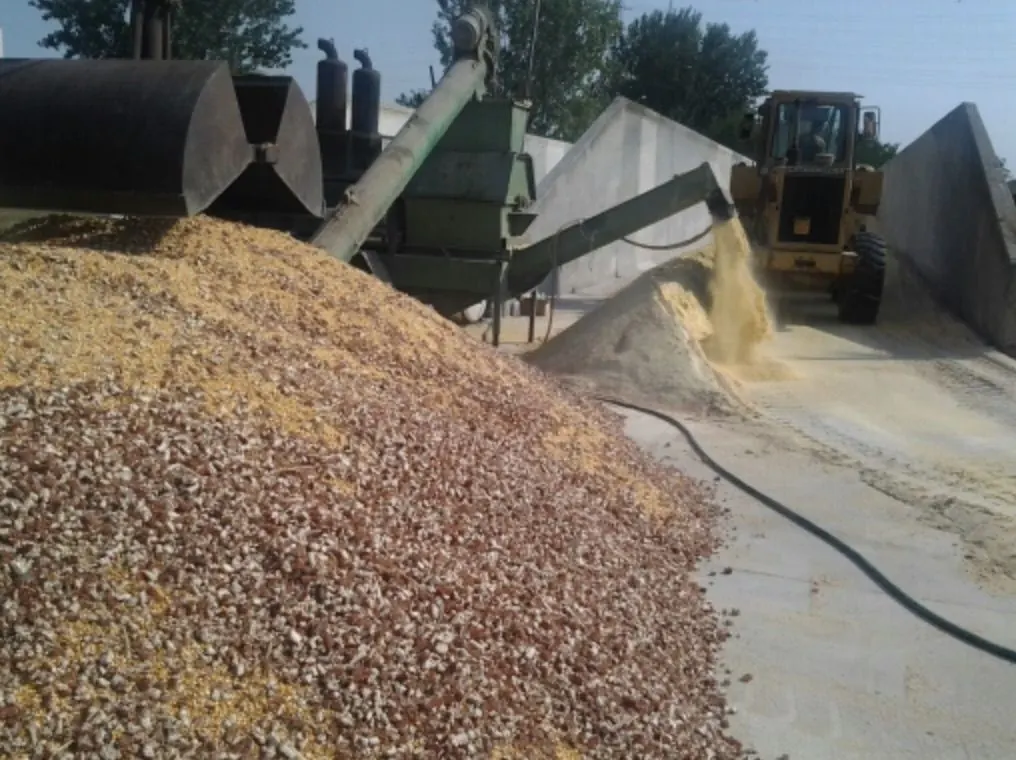
Whole-plant high-moisture maize
Whole-plant high-moisture maize for finishing pigs: a great on-farm resource.
Read the article
Pigs
Nervousness in pigs
Among the products that have recently appeared and can help with some signs of excessive nervousness are pheromones.
Read the article
Cattle
Heat stress
In the summer months lactating cows face metabolic difficulties, with effects on animal welfare and a resulting drop in performance.
Read the article
Cattle
Alpha Unifeed Control for ruminants
A blend of acids formulated for ration stability during the summer.
Read the article